Discover the technology that powers 90% of the world's engineered quartz — Request a Demo →
Green Manufacturing

Breton Sustainability — Engineering for a Lower-Impact Industry

Breton's mission is not only to build the best stone processing machinery — it's to design production systems that allow our customers to manufacture world-class surfaces while consuming fewer resources and generating less waste.

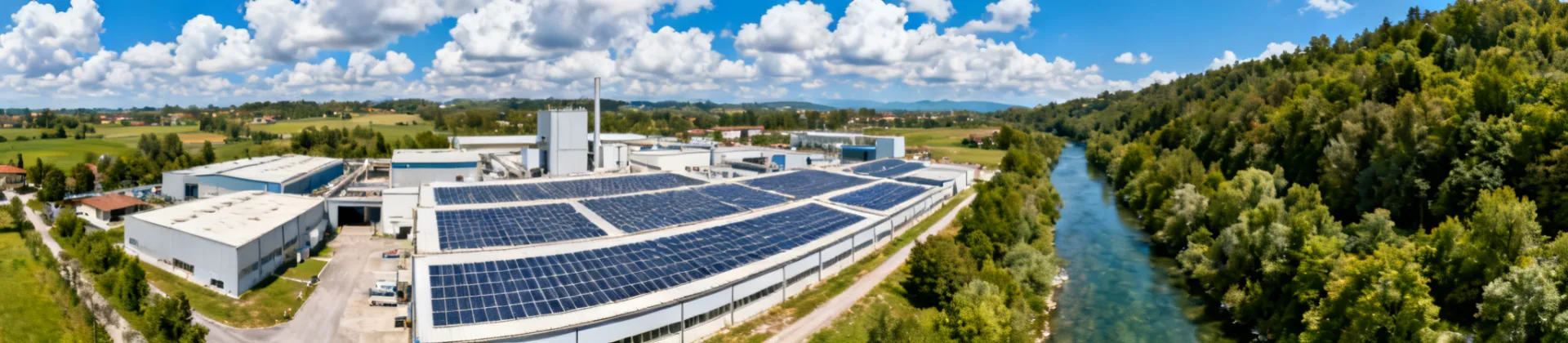
Breton sustainable manufacturing campus with renewable energy infrastructure and green surroundings
Our Commitments

Three Pillars of Breton's Sustainability Strategy

Every machinery generation we release is held to a more demanding environmental standard than the last. These are the areas where we measure and publish our progress.

Energy-Efficient Production

Each new Bretonstone press generation achieves measurably lower energy consumption per slab produced. Our latest hydraulic-drive optimizations deliver up to 28% energy reduction compared to our 2015 baseline models, without any reduction in pressing cycle quality or throughput rate.

  • Intelligent hydraulic pressure recovery systems
  • Variable-frequency drive integration on all motors
  • Optimized vacuum pump scheduling reduces idle energy by 35%
  • Smart thermal management in curing ovens

Recycled Mineral Integration

The Bretonstone process is uniquely suited to incorporate post-industrial recycled materials. Our applications engineering team has developed validated formulation protocols for recycled quartz, glass cullet, ceramic waste, and other mineral byproducts — enabling producers to create certified high-recycled-content products without mechanical performance penalties.

  • Up to 75% recycled aggregate content validated
  • Formulation support from Breton applications engineers
  • Compatible with NSF/ANSI 342 certification pathways
  • Glass cullet and ceramic waste processing capability

Water & Effluent Management

Stone processing is a water-intensive industry. Breton machines incorporate closed-loop water recycling systems as standard, capturing slurry water from cutting, polishing, and calibration operations, processing it through sedimentation and filtration systems, and returning treated water to the production cycle — reducing freshwater consumption by up to 85% versus once-through systems.

  • Closed-loop water recycling standard on all polishing lines
  • Sludge dewatering press integration
  • Recycled water quality monitoring
  • Up to 85% freshwater reduction versus conventional systems
Measured Results

Environmental Performance Metrics

These figures reflect performance improvements measured in production lines installed with our current-generation equipment versus our 2015 baseline. Third-party verified.

28% Energy Reduction (press cycle) vs. 2015 baseline; measured at 10 production sites
85% Water Recycling Rate closed-loop systems; confirmed at certified facilities
75% Max Recycled Mineral Content validated formulation; third-party mechanical testing
CE Machinery Certification all Breton machinery CE certified; EU Green Deal compliant pathways

Limitations: Energy reduction figures represent best-case installations with optimal operating parameters. Actual results vary by facility configuration, production mix, and operator practices. Breton does not guarantee identical results at every installation.

Technology Comparison

Engineered Quartz vs. Alternative Surface Materials

An objective comparison of key sustainability and performance metrics across leading surface material categories, to help specifiers and producers make informed decisions.

Attribute Engineered Quartz
(Bretonstone Process)
Natural Granite & Marble Porcelain / Ceramic Tile Solid Surface (Acrylic)
Recycled Content Potential Up to 75% post-industrial mineral 0% (quarried virgin stone) 20–40% recycled ceramic in some lines 0–15% (acrylic base limits inclusion)
Water Absorption <0.02% (near-zero porosity) 0.1–2.0% (varies by stone type) <0.5% (vitrified) to 3%+ (non-vitrified) 0.0% (non-porous acrylic surface)
Mohs Hardness 6–7 Mohs 6–7 Mohs (granite); 3–4 (marble) 6–8 Mohs (fully vitrified porcelain) 2–3 Mohs (prone to scratching)
Production Energy Intensity Medium; up to 28% reduction with current-gen Breton presses High (quarrying, transport, cutting) High (kiln firing at 1,200–1,400°C) Medium (casting and curing process)
End-of-Life Recyclability Limited — resin-mineral composite; secondary aggregate use possible Moderate — can be re-cut or crushed for aggregate Good — ceramic aggregate widely accepted in construction Limited — acrylic polymer not easily recycled
Resin / Binder Dependency 8–12% polymer resin (petrochemical); low-styrene options available None — natural material None — inorganic firing process ~35% acrylic resin content
Large-Format Availability Up to 2000×4000 mm standard production Limited by quarry block size; typically ≤3200×1600 mm Up to 3200×1600 mm (leading producers) Up to 3658×762 mm standard sheets
Green Certification Pathways NSF/ANSI 342, DECLARE label, LEED MR credits LEED MR credits (regional material); limited eco-labels NSF/ANSI 342, GREENGUARD, LEED credits GREENGUARD (low VOC variants); limited material credits

Sources: Water absorption and hardness data based on ASTM C97, ASTM C1026, and EN 14617 published test standards. Recycled content ranges reflect industry practice from NSF/ANSI 342 certified product submissions (2020–2025). Porcelain firing temperature from ISO 13006. Breton press energy reduction vs. 2015 baseline measured at 10 production sites; individual results vary. Highlighted cells indicate relative advantage within that attribute category.

Honest Assessment

Where We Still Have Work To Do

We believe credible sustainability communication requires transparency about limitations and ongoing challenges, not just achievements.

Resin Dependency

Engineered quartz production currently requires polymer resins (typically unsaturated polyester or epoxy-based) as a binding agent. These resins are petrochemical derivatives. Bio-based resin alternatives are under active development across the industry, but as of 2026 no bio-based formulation achieves the same mechanical and chemical resistance properties at commercially viable cost. Breton is monitoring this development and has validated our press systems for compatibility with low-styrene formulations as an interim measure.

End-of-Life Processing

Engineered quartz surfaces are difficult to recycle at end of life due to the resin-mineral composite structure. Grinding for use as a secondary aggregate in concrete or road construction is technically possible but not yet widely practiced due to logistics and cost barriers. The industry, including Breton, is actively engaged in developing viable end-of-life pathways.

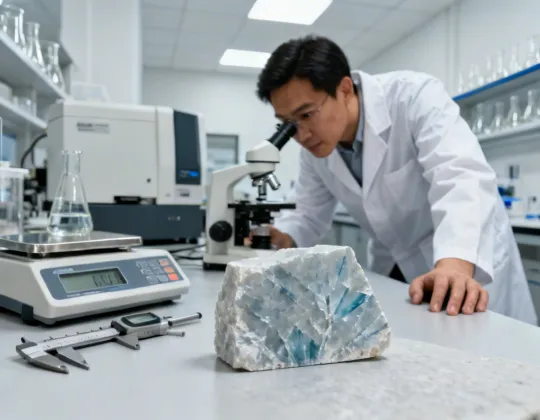
Breton R&D team researching sustainable engineered quartz formulations and next-generation production methods

Certifications & Standards

  • ISO 9001:2015 — Quality Management System
  • CE Certification — all machinery lines
  • REACH compliance for materials in contact with food surfaces
  • NSF/ANSI 51 compatibility support for food-safe surfaces

Build Greener with Breton

Discuss how Breton's process can help your brand achieve its sustainability targets without compromising on product quality.

Talk to Our Sustainability Team